HHQC Research Published in "Quantum": Advancing Topological Data Analysis via Quantum Walks
HHQC Research Published in "Quantum": Advancing Topological Data Analysis via Quantum Walks
Post Date
June 18, 2026
Centers
Topic
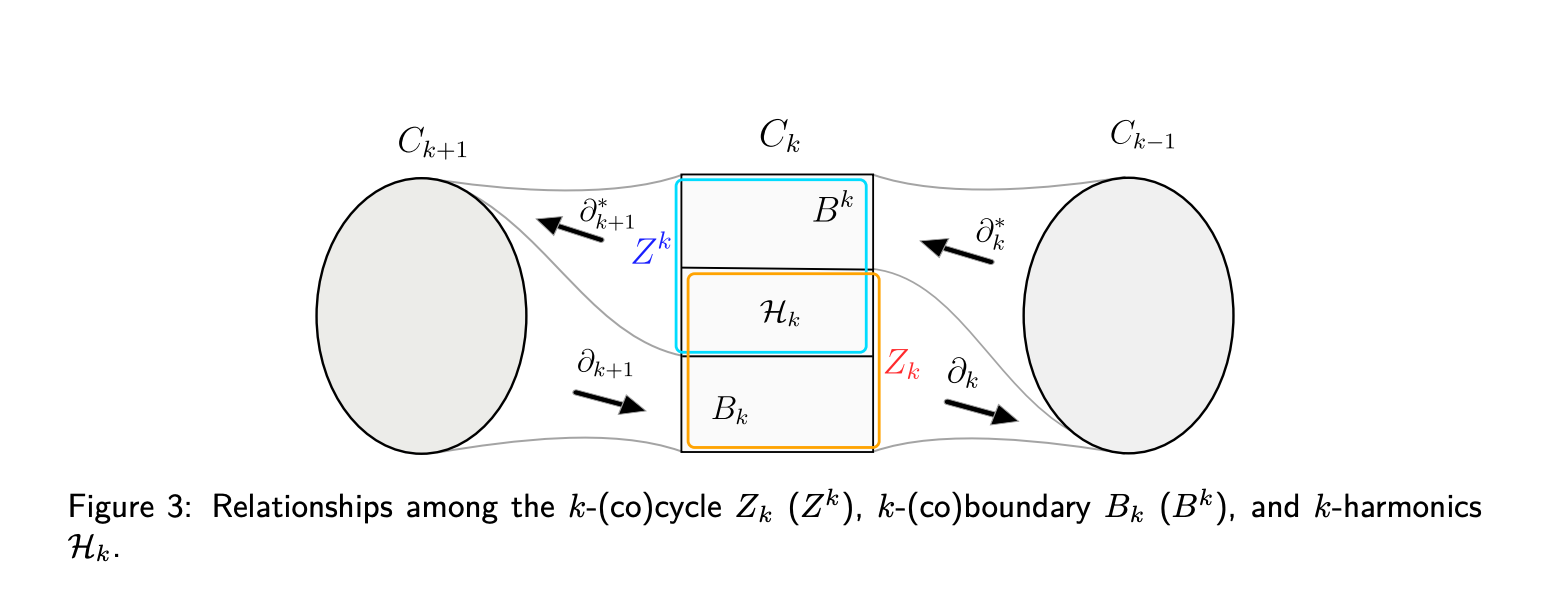
The Hon Hai Quantum Computing Research Center (HHQC) announced that its latest collaborative research, "Quantum Walks on Simplicial Complexes and Harmonic Homology: Application to Topological Data Analysis with Superpolynomial Speedups," was officially published in the peer-reviewed journal Quantum on June 15, 2026. The study was jointly conducted by Ryu Hayakawa from Kyoto University, HHQC researchers Kuo-Chin Chen and Director Min-Hsiu Hsieh.
🎓 Innovative Quantum Walk Algorithm for High-Dimensional Data
Topological Data Analysis (TDA) is used to detect hidden structural features, such as clusters, loops, and voids, in real-world data. However, performing these computations on large datasets often leads to intractable classical computation. To address this, the research team designed a novel quantum algorithm based on quantum walks on "simplicial complexes"—a higher-dimensional generalization of graphs.
A core technical contribution of this study is enabling the quantum walker to operate on a state space encompassing both positively and negatively oriented simplices. By utilizing coherent quantum interference between these paired simplices, the team successfully encoded the combinatorial Laplacian, whose zero-energy states reflect the topology of the data. This construction operates without the need for a costly quantum oracle and requires $O(n^3 \log(1/\epsilon) / \lambda_k)$ gates .
🚀 Achieving Superpolynomial Speedups in TDA
The research indicates an apparent superpolynomial quantum speedup over the best-known classical algorithms when estimating topological invariants, such as normalized persistent Betti numbers of clique complexes.
Furthermore, the team extended this framework by constructing variant quantum walks capable of solving the high-dimensional discrete Dirichlet problem (HDDP) with an apparent superpolynomial speedup. The study also verifies a specific QMA1-hard problem related to clique complex homology, demonstrating its broader implications in computational complexity theory .
🤝 Global Collaboration Driving Quantum Theoretical Research
This publication reflects HHQC’s ongoing efforts in advancing foundational quantum theory and fostering international academic collaboration. Moving forward, the Quantum Computing Research Center will continue to engage with the global scientific community to bridge theoretical quantum research with practical application architectures .
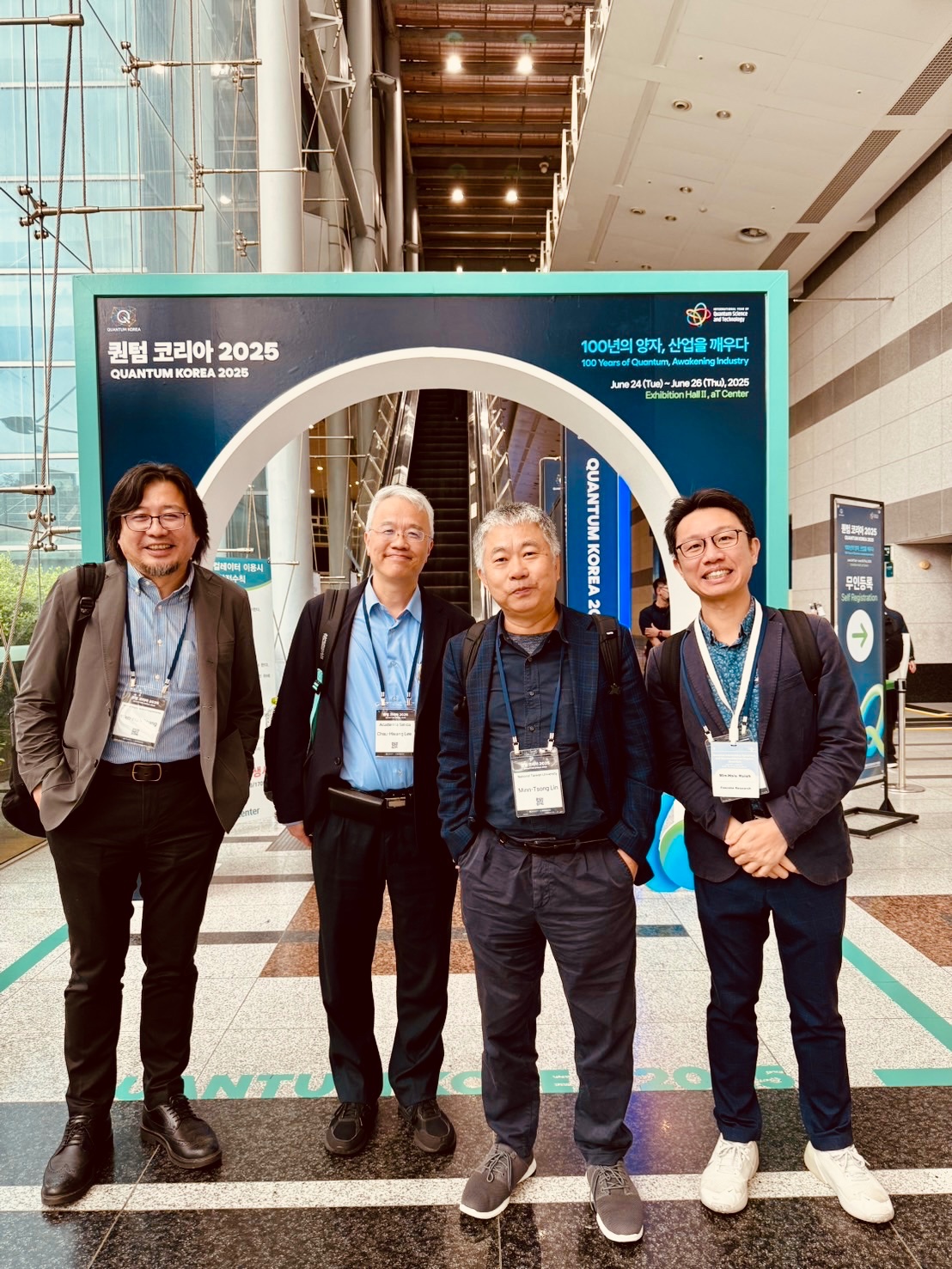
Director Min-Hsiu Hsieh Attends Quantum Korea 2025 with Taiwan Delegation, Showcasing Taiwan’s Quantum Strength
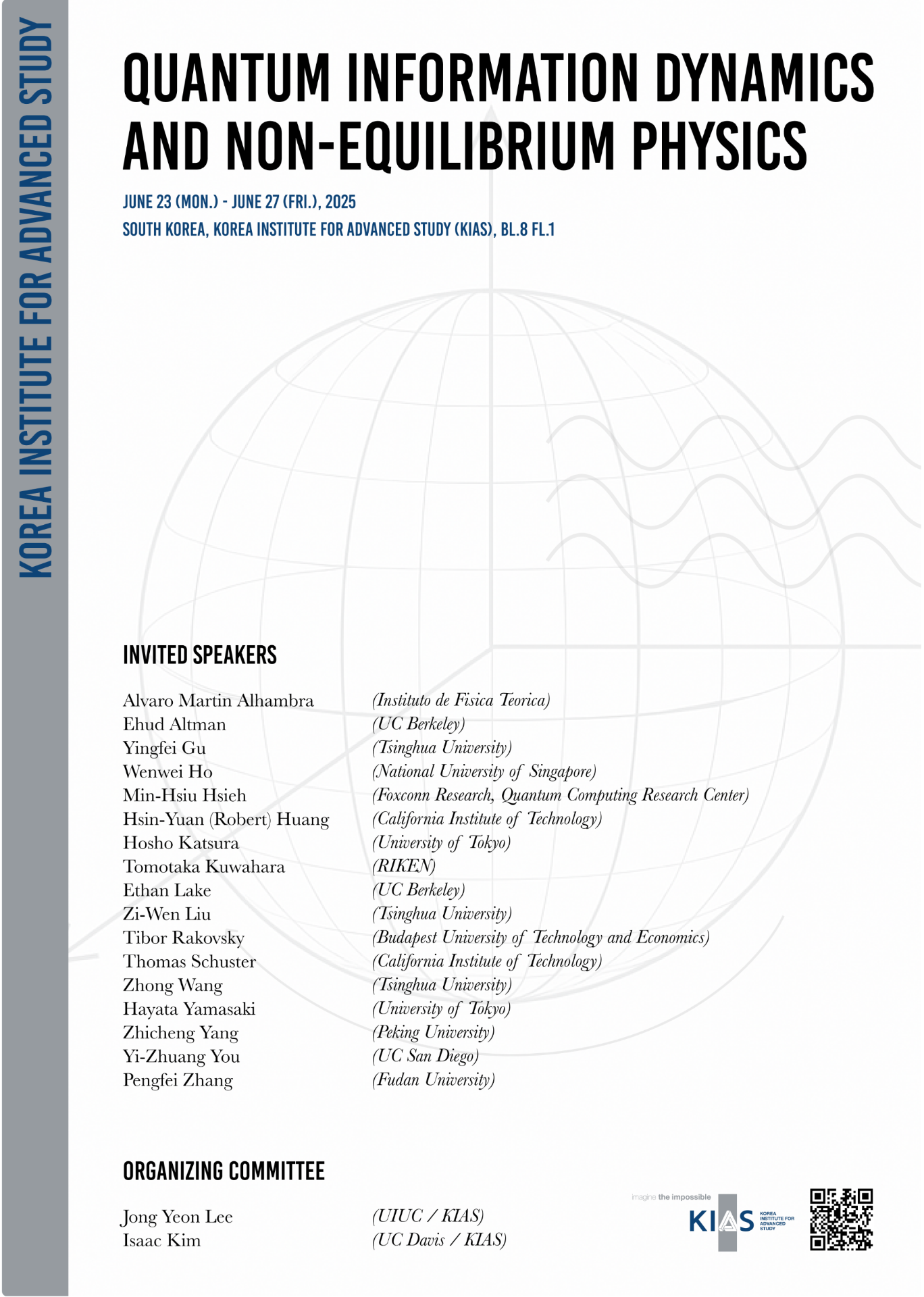
Director Hsieh was invited to attend the international academic conference Quantum Information Dynamics and Non-Equilibrium Physics 2025, held at KIAS (Korea Institute for Advanced Study) in Seoul.
Hon Hai Research Institute Director Invited to IEEE SiPS 2025 Technical Program Committee