🌟 HHQC’s Quantum Chemistry Simulation Research Accepted by International Journal Physical Review Research
🌟 HHQC’s Quantum Chemistry Simulation Research Accepted by International Journal Physical Review Research
Post Date
July 13, 2026
Centers
Topic
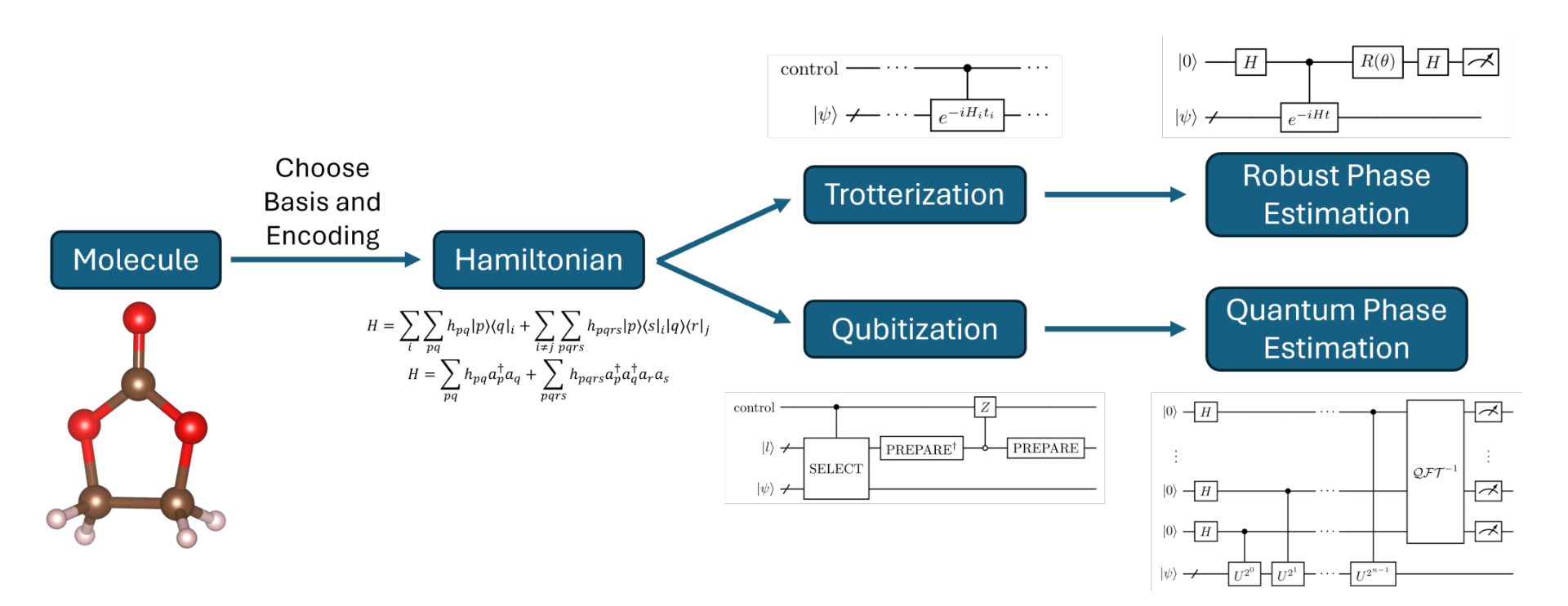
The Hon Hai Quantum Computing Research Center (HHQC) announced that its latest collaborative research has been officially accepted for publication in the renowned international academic journal Physical Review Research. The study, titled "Benchmarking quantum simulation of chemical Hamiltonians using the sorted-list encoding" (arXiv:2510.01710), was jointly conducted by HHQC researchers Calvin Ku and Yu-Cheng Chen, alongside Director Min-Hsiu Hsieh, in collaboration with Professor Alice Hu from the City University of Hong Kong. The paper provides a comprehensive benchmark and quantitative analysis of the resource consumption required for simulating chemical Hamiltonians on quantum computers.
🎓 Evaluating Fermionic Encoding Techniques: Optimizing Resource Demands for Quantum Chemistry Simulation
This research explores how to optimize circuit resources and efficiency for large-scale molecular and material simulations within fault-tolerant quantum computing (FTQC) frameworks.
Technical Background: Quantum Phase Estimation (QPE) serves as a core quantum algorithm for precisely computing the molecular ground-state energies of chemical systems. However, effectively mapping (encoding) fermionic operators onto qubits given limited qubit and gate resources remains a critical theoretical challenge for the practical implementation of quantum applications.
Core Progress: The research team focused on the "sorted-list encoding" scheme and conducted a thorough benchmarking of resource consumption across different simulation frameworks (such as Trotterization and Qubitization) and various bases for chemical Hamiltonians. This scheme leverages the physical symmetry of particle number conservation within chemical systems to efficiently streamline the representation of quantum states.
Technical Breakthrough: In practical chemical simulation scenarios where the number of electrons ($N$) is significantly smaller than the number of orbitals ($M$), the sorted-list encoding reduces the complexity of qubits and logic gates from the traditional Jordan-Wigner encoding's scale of $O(M)$ down to a scale of $O(N \log M)$. The study meticulously quantifies the trade-offs regarding Clifford gates and T-gates, offering a pivotal quantitative guide and decision-making framework for executing real-world molecular computations on future fault-tolerant quantum computers.
🤝 Deepening Advanced Quantum Application Layouts Through Global Academic Collaboration
This milestone reflects HHQC's dedication to advancing quantum application algorithms and fostering international academic partnerships. By joining forces with top-tier academic institutions like the City University of Hong Kong, the research team successfully bridged quantum information theory with practical chemical simulation frameworks. Moving forward, the Quantum Computing Research Center will continue to collaborate with the global scientific community to optimize the resource allocation of cutting-edge quantum algorithms, providing a robust theoretical foundation for next-generation material science and drug discovery.
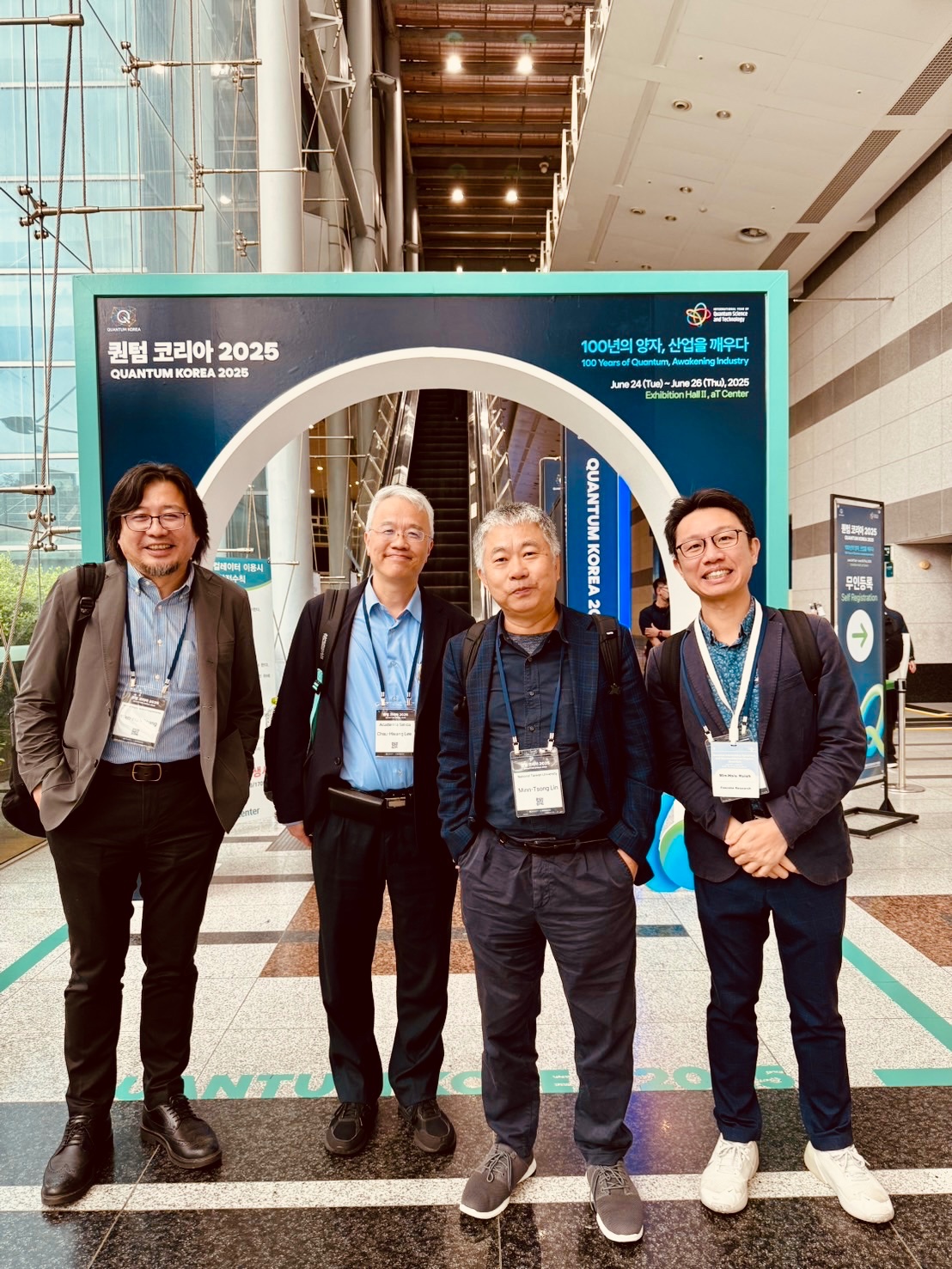
Director Min-Hsiu Hsieh Attends Quantum Korea 2025 with Taiwan Delegation, Showcasing Taiwan’s Quantum Strength
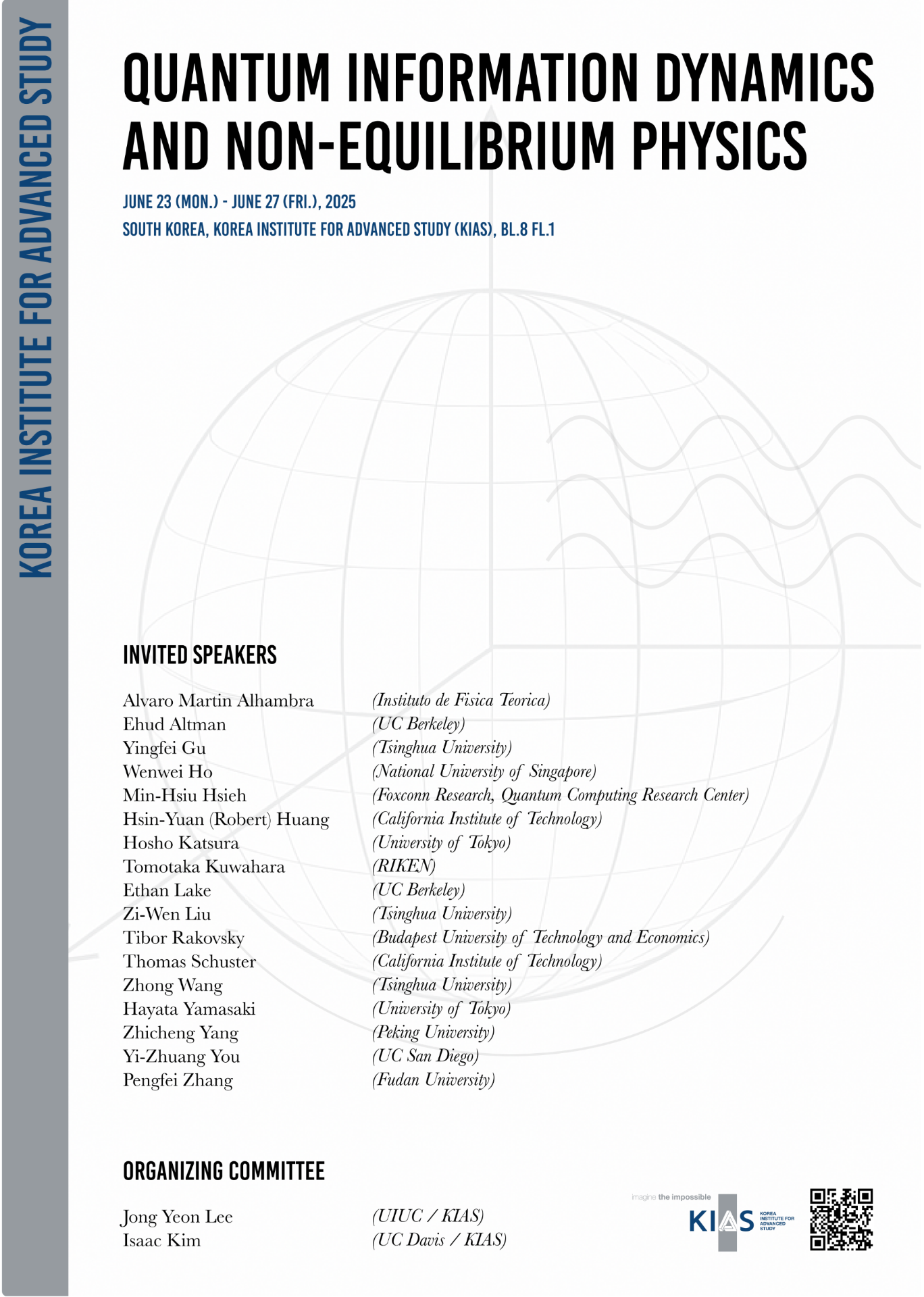
Director Hsieh was invited to attend the international academic conference Quantum Information Dynamics and Non-Equilibrium Physics 2025, held at KIAS (Korea Institute for Advanced Study) in Seoul.
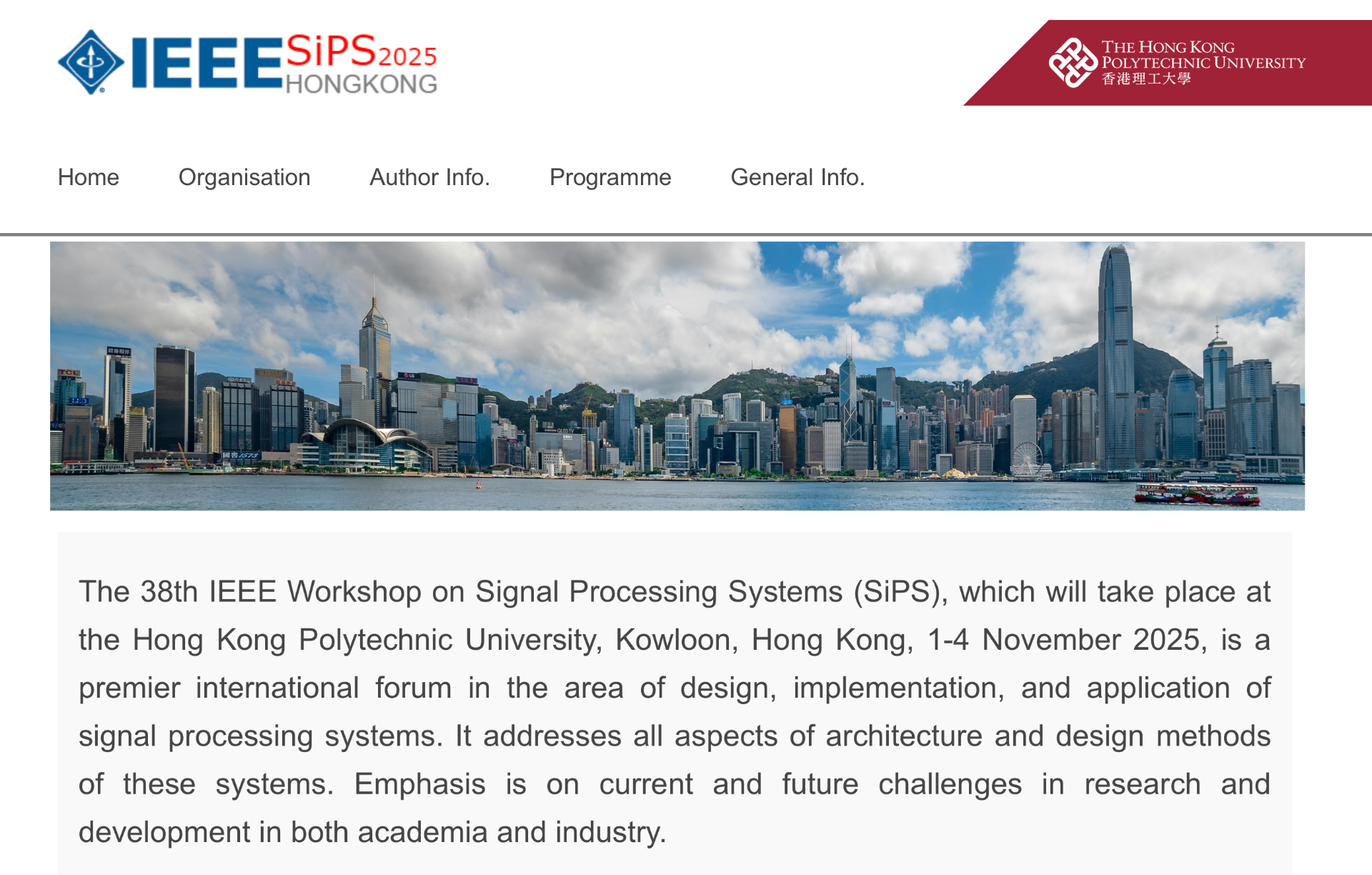
Hon Hai Research Institute Director Invited to IEEE SiPS 2025 Technical Program Committee