Director Min-Hsiu Hsieh Invited to Deliver Talk at 2026 YITP QEC Workshop, Sharing Breakthroughs in Linear-Time Quantum Error-Correcting Codes
Director Min-Hsiu Hsieh Invited to Deliver Talk at 2026 YITP QEC Workshop, Sharing Breakthroughs in Linear-Time Quantum Error-Correcting Codes
Post Date
October 22, 2026
Centers
Topic
Dr. Min-Hsiu Hsieh, Director of the Quantum Computing Research Center, was invited to attend the "2026 YITP Workshop on Quantum Error Correction and Logical Quantum Information Processing" at the Yukawa Institute for Theoretical Physics (YITP), Kyoto University. During the workshop, Director Hsieh delivered an invited talk, presenting the team's latest theoretical breakthroughs and research advances in "Linear-Time Encodable and Decodable Quantum Error-Correcting Codes."
🏛️ Focusing on Fault-Tolerant Architectures: Deep Academic Exchanges at Kyoto University’s YITP As an internationally renowned center with a rich history in theoretical physics, YITP brought together leading global scholars in quantum error correction (QEC) and logical quantum information processing for this workshop to deeply explore the theoretical boundaries and hardware implementations of fault-tolerant quantum computing (FTQC). Director Hsieh's visit not only highlighted HHQC's deep research capabilities in fault-tolerant quantum coding theory, but also facilitated extensive discussions with international peers on architectural scalability and practical hardware challenges.
🎓 Core Lecture Breakthrough: Constructing Quantum Error-Correcting Codes with Linear-Time Encoding and Decoding In his presentation at the workshop, Director Hsieh detailed an innovative solution addressing a fundamental bottleneck in realizing large-scale fault-tolerant quantum computers:
Core Challenge: In practical fault-tolerant quantum computing, if encoding and decoding of quantum error-correcting codes take too long, qubits will rapidly lose coherence due to environmental noise. Therefore, quantum codes featuring low-latency, rapid encoding and decoding capabilities are essential building blocks for distributed quantum computing and robust communication.
Asymptotically Good Quantum Code Design: Director Hsieh and his collaborative team (Adam Wills, Ting-Chun Lin, and Rachel Yun Zhang) demonstrated how to construct asymptotically good quantum error-correcting codes that enable quantum states to be encoded and decoded using quantum circuits with logarithmic depth and a linear total number of gates.
Low-Complexity Decoding Algorithm: The research framework further enables classical decoding algorithms to operate efficiently within logarithmic depth, significantly optimizing the required gate count to O(n log n) and providing rigorous theoretical support for seamlessly bridging large-scale physical quantum hardware with logical quantum processing architectures.
🤝 Advancing Foundational Coding Theory and Fostering Next-Generation Quantum Collaborations Quantum error-correcting codes represent the critical gateway for transitioning from Noisy Intermediate-Scale Quantum (NISQ) devices to practical fault-tolerant quantum computing. Director Hsieh’s presentation and deep exchanges at the YITP QEC Workshop once again underscore HHQC's dedication to foundational theoretical research in quantum computation. Looking ahead, the Quantum Computing Research Center will continue partnering with leading international research communities and multidisciplinary teams to drive theoretical breakthroughs and practical algorithm designs, establishing a solid foundation for next-generation technological infrastructure.
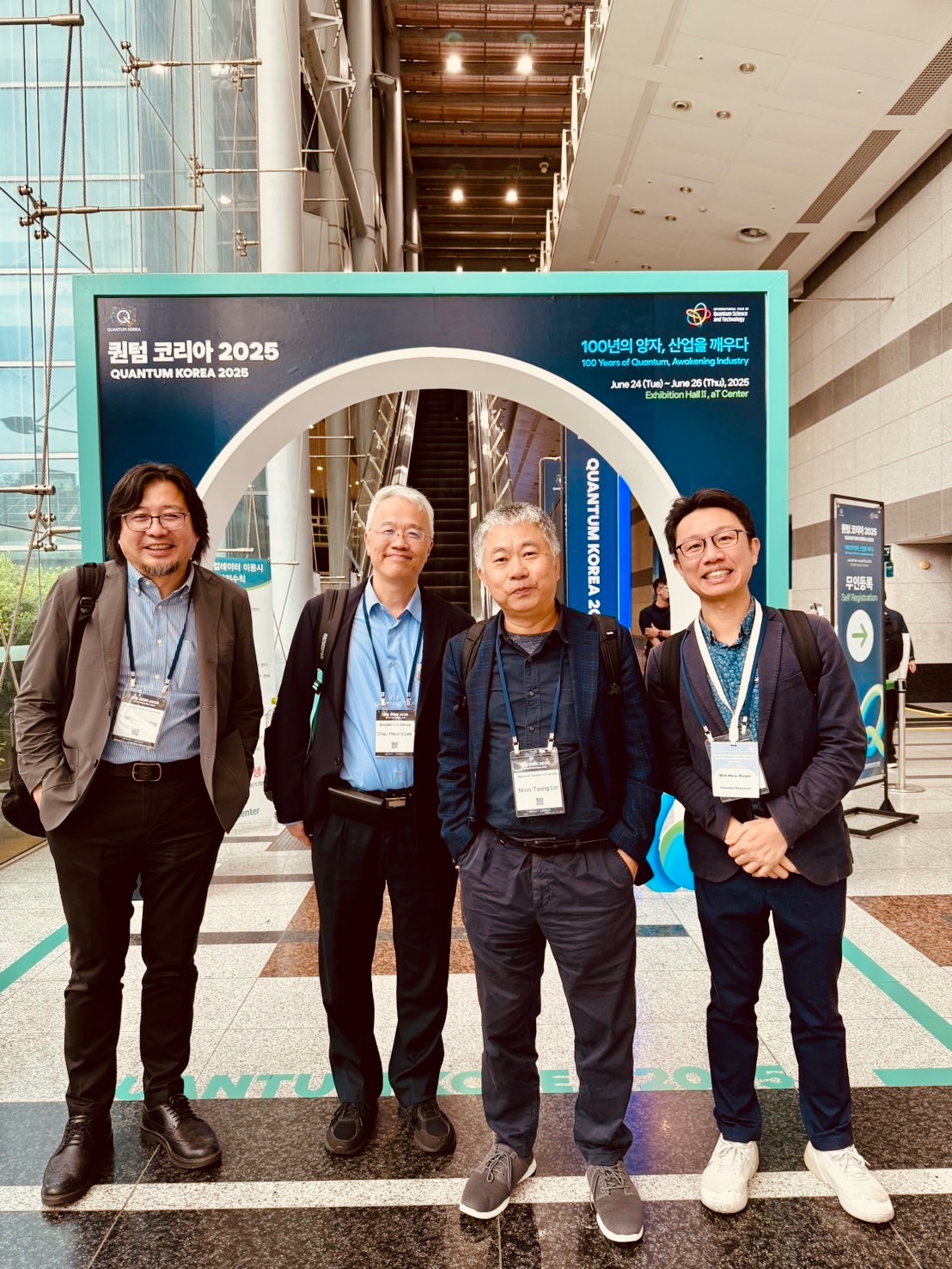
Director Min-Hsiu Hsieh Attends Quantum Korea 2025 with Taiwan Delegation, Showcasing Taiwan’s Quantum Strength
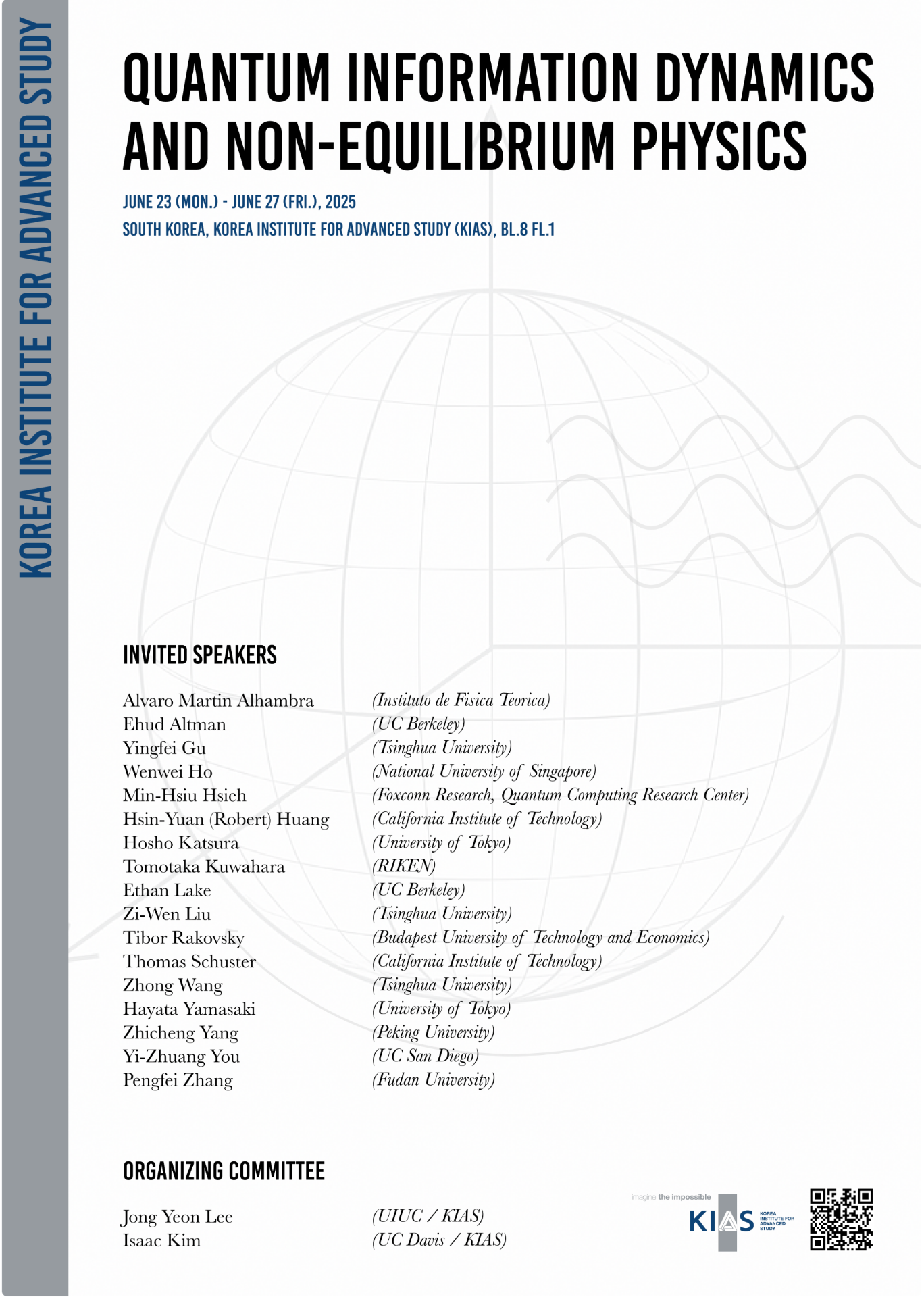
Director Hsieh was invited to attend the international academic conference Quantum Information Dynamics and Non-Equilibrium Physics 2025, held at KIAS (Korea Institute for Advanced Study) in Seoul.
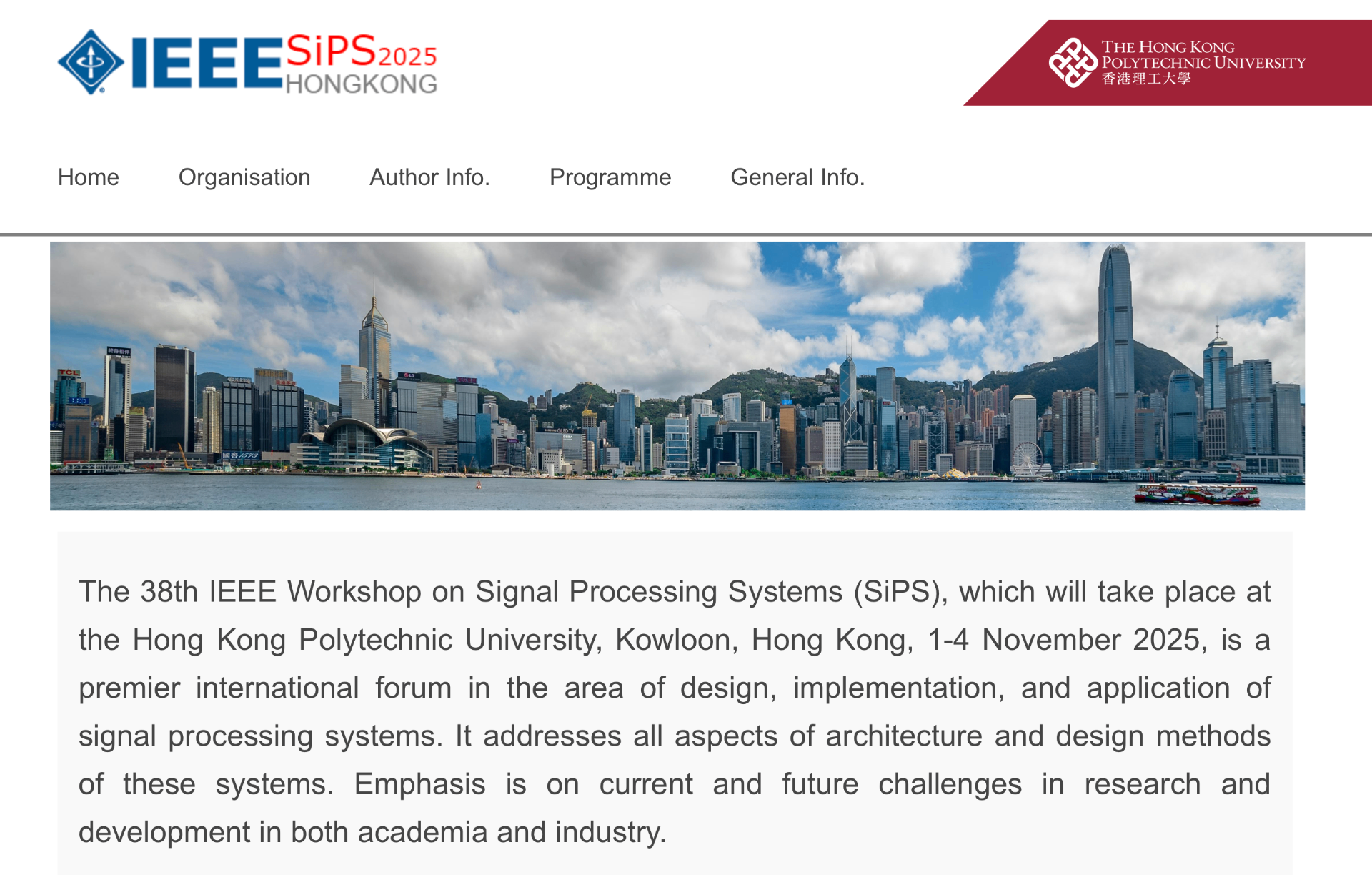
Hon Hai Research Institute Director Invited to IEEE SiPS 2025 Technical Program Committee